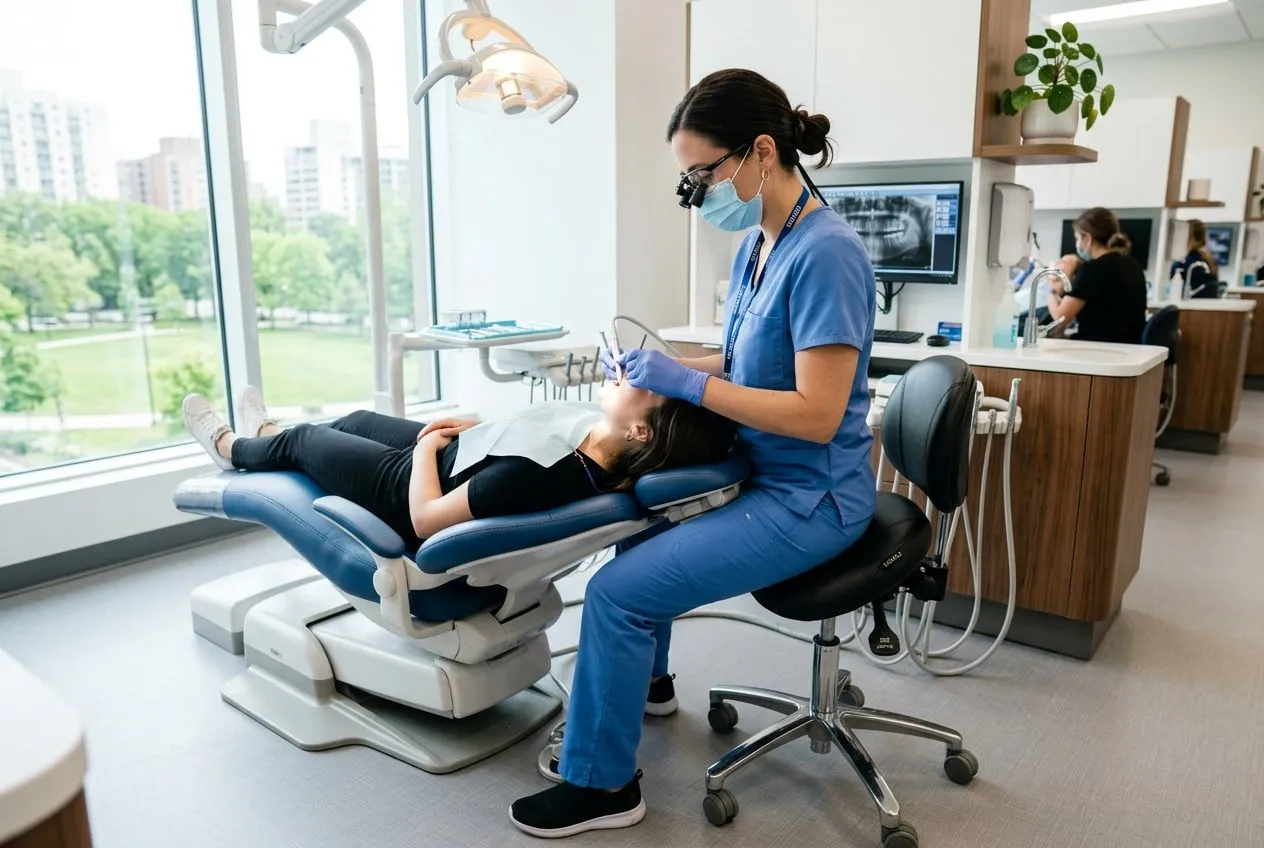
Walk into most dental clinics, veterinary practices, or specialist craftwork studios and you’ll see chairs that look nothing like a standard office chair. The seat slopes forward at an angle reminiscent of a horse saddle — and that unusual shape has a specific ergonomic purpose.
Saddle chairs are a niche but growing category in the commercial seating market. For distributors supplying healthcare, beauty salon, and specialist professional segments, understanding the saddle chair’s benefits and limitations is essential.
What Is a Saddle Chair?
A saddle chair features a seat that is shaped like a horse saddle — wider at the back and narrowing toward the front, with a downward slope from the center. This shape encourages the pelvis to tilt forward, positioning the user in a posture that resembles standing more than conventional sitting.
Most saddle chairs are backless and sit at a height between a standard office chair and a bar stool. Some models include a back split (two separate seat cushions) to reduce inner thigh pressure.
The Ergonomic Case for Saddle Seating
When seated in a conventional chair, the hip angle is approximately 90 degrees. This flattens the lumbar curve and increases pressure on the intervertebral discs.
The forward pelvic tilt encouraged by a saddle seat opens the hip angle to approximately 110–130 degrees, which:
- Restores the natural lumbar lordosis (the inward curve of the lower back)
- Activates core and back muscles to maintain an upright posture
- Reduces disc pressure in the lumbar region compared to conventional sitting
- Allows the arms to hang naturally from the shoulders, which is particularly important for precision work
For professionals who alternate between sitting and leaning — dentists, surgeons, salon stylists, and laboratory technicians — the saddle chair’s elevated position and forward posture also makes it easier to move around the patient or workstation.
Who Benefits from Saddle Chairs?
Dental professionals: Dentists and dental hygienists sit in constrained postures for hours, often bending over patients. Saddle chairs allow them to work in a more upright, active posture that reduces lower back and neck strain over a career.
Salon stylists: Hairdressers stand or sit throughout the day. A saddle stool at the right height allows them to sit comfortably at the client’s level without the hunched-forward posture of a standard chair.
Veterinary practices: Similar to dental use — practitioners need to lean and reach while remaining stable.
Craftwork and precision assembly: Jewelers, watchmakers, tailors, and similar professionals performing fine manual work benefit from the more upright, active posture that saddle seating encourages.
Users with hip or lower back issues: For some individuals with specific lower back conditions, the reduced lumbar flattening of saddle seating reduces pain compared to conventional chairs. Always consult a physiotherapist for medically-driven seating decisions.
Limitations of Saddle Chairs
Saddle chairs are not for everyone or every use case:
- Adjustment period: Most new users find saddle chairs uncomfortable for the first 1–3 weeks as their body adapts to the new posture. This is normal but can deter casual users.
- Not suitable for long desk-based work without armrests: Without arm support, long periods of keyboard and mouse use can increase shoulder and neck strain.
- Height requirements: Saddle chairs typically require a desk or workstation at a higher position (standing desk height or adjustable desk).
- Individual variability: Some users never adapt comfortably to saddle seating regardless of adjustment.
What to Look for in a Commercial Saddle Chair
For B2B buyers supplying healthcare or salon markets:
- Gas cylinder quality: Commercial-grade cylinders for frequent height adjustment by different users or throughout the day
- Seat material: Hygiene-grade covers that resist disinfectants are essential in clinical environments
- Base stability: Wide five-star bases prevent tipping during the active movement common in clinical settings
- Split seat option: Reduces inner thigh pressure, increasing the range of users who adapt comfortably
CXstyle manufactures saddle chairs and specialist stools for salon, clinical, and industrial applications. Full OEM customization is available including cover materials, base finishes, and branding.
Browse our bar stool and saddle chair range or contact us for wholesale pricing.