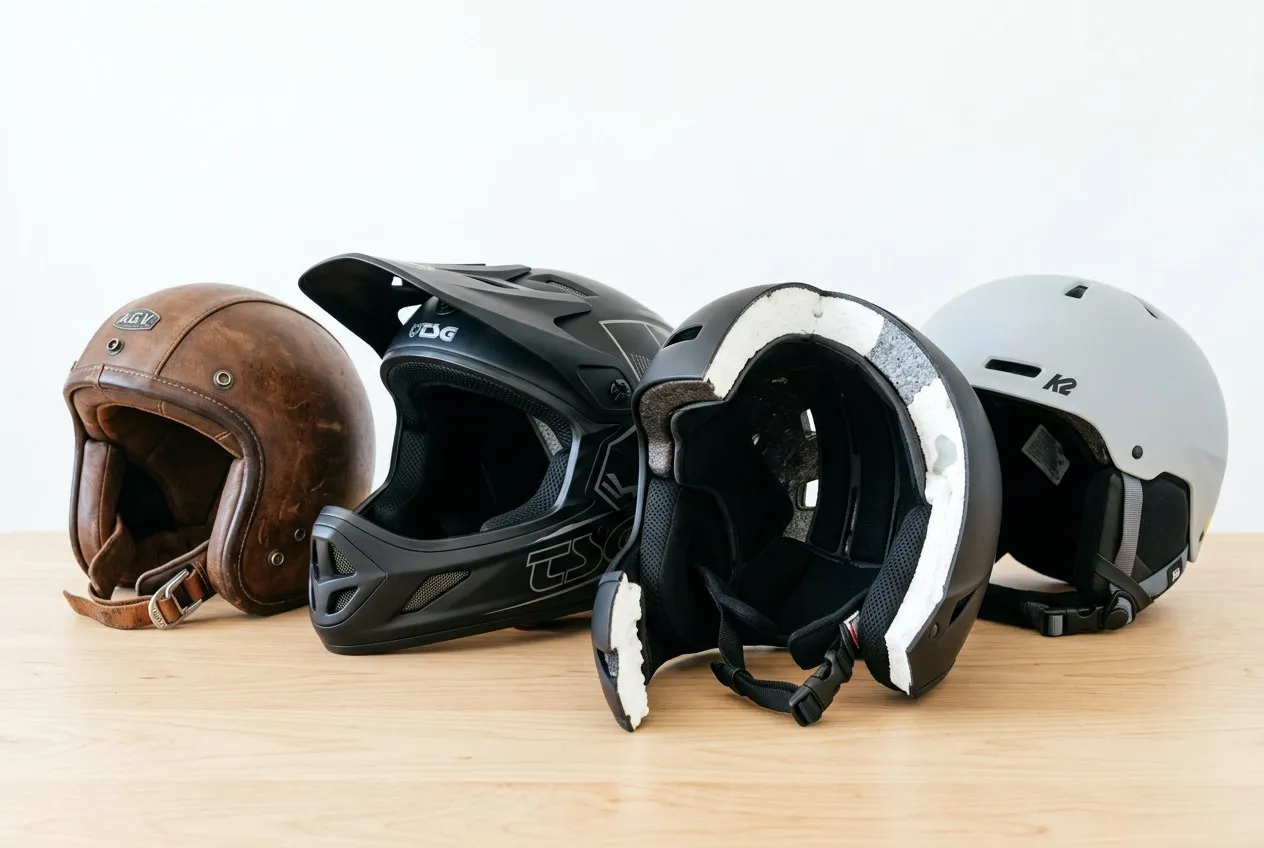
Protective helmets for rugby, boxing, and other contact sports look simple from the outside — but the foam engineering behind effective impact protection is more sophisticated than it appears. For sports equipment distributors, team gear suppliers, and sporting goods retailers considering OEM helmet sourcing, understanding the manufacturing fundamentals is essential.
The Function of a Protective Helmet
A sports helmet’s job is to manage impact energy. When a player’s head receives an impact, the helmet must:
- Spread the force across a larger surface area, reducing peak pressure on any one point
- Absorb energy by allowing controlled deformation of the foam material
- Decelerate the head more slowly than would occur without the helmet, reducing the rate of acceleration change (the primary cause of concussion)
The foam’s ability to crush, compress, and slow the impact force is the core of the protection mechanism.
Key Materials in Sports Helmet Construction
EVA (Ethylene Vinyl Acetate) Foam EVA is the most widely used material in sports helmet padding. It is:
- Lightweight (important for comfort during athletic activity)
- Available in a range of densities (different densities manage impacts of different energy levels)
- Durable over repeated impacts
- Cost-effective for high-volume production
High-density EVA manages high-energy impacts (relevant in rugby, ice hockey, cycling). Lower-density EVA provides cushioning for lower-energy impacts and comfort.
PU (Polyurethane) Foam PU foam offers higher energy absorption than EVA at equivalent density, making it suitable for higher-impact applications. It is more expensive to produce and slightly heavier.
EPS (Expanded Polystyrene) Used in cycling and ski helmets where one-time high-energy impact protection is the priority. EPS permanently deforms on significant impact — which is why cycling helmets must be replaced after any significant impact.
For rugby and boxing (where repeated, moderate-energy impacts are the norm), EVA and PU foams that recover their shape after each impact are the appropriate materials.
Construction Methods
Foam Injection Molding The primary manufacturing method for sports helmet padding. Liquid foam compounds are injected into precision molds, producing consistent density and shape. This is CXstyle’s core manufacturing capability — the same precision foam molding that produces ergonomic seat cushions and lumbar supports.
Quality outcomes depend on:
- Mold precision (tight tolerances ensure consistent wall thickness and protection)
- Material formula (foam density, cell structure, and chemical formulation affect protection characteristics)
- Cure time and temperature control (affects final density and durability)
Shell Materials The outer shell distributes impact force before it reaches the foam liner. Common materials:
- Nylon shell: Lightweight, flexible, good for rugby headgear where a completely rigid shell is not required
- ABS plastic: Harder shell providing more initial impact distribution, used in boxing headguards
- Leather outer cover: Traditional material in boxing headgear, providing a professional appearance and durability
What B2B Buyers Should Evaluate
Impact protection standards: Different sports governing bodies and regional regulatory frameworks have different helmet certification requirements. Confirm which standards apply in your target market before production.
Material test reports: Request test reports for foam density, impact absorption performance, and cover material durability. Reputable manufacturers can provide these documents.
Fit system: How does the helmet secure to the head? Chin straps, adjustable Velcro straps, and sizing systems affect both safety and comfort.
Custom branding capability: Most sports helmets for team or club use require custom colors and logo application. Confirm the manufacturer’s process for color matching and logo placement.
OEM Helmet Manufacturing with CXstyle
CXstyle’s protective helmet range leverages our foam molding expertise developed across our ergonomic product lines. We produce rugby helmets, boxing headgear, and protective sports helmets for sports equipment distributors and team gear suppliers.
OEM customization is available including:
- Custom colors and color combinations
- Team or brand logo application
- Custom strap colors and hardware finishes
- Private-label packaging
Browse our helmet collection or contact us for OEM inquiries and sample requests.